Modern interior design increasingly prioritizes flexibility, adaptability, and efficient use of space. As homes and offices evolve to support multiple activities within the same area, solutions that allow quick reconfiguration have become essential. One such solution is the foldable partition, a versatile interior feature designed to divide or open up spaces as needed.
Unlike fixed walls, foldable partitions provide temporary or semi-permanent separation without extensive structural changes. They are widely used in residential apartments, corporate offices, educational facilities, hospitality venues, and even retail spaces. Understanding how they work, what materials they use, and how to choose the right type can help you make informed decisions about space planning and interior functionality.
What Is a Foldable Partition and Why It Is Used in Modern Interiors
A foldable partition is a movable dividing system that separates a larger space into smaller functional areas. It typically operates through hinged panels, sliding tracks, or accordion-style folding mechanisms that allow it to expand and retract smoothly.
The growing popularity of open-plan layouts has increased the demand for flexible dividing solutions. Instead of constructing permanent walls, designers use systems such as a foldable partition to maintain openness while retaining the option for privacy when needed.
Common reasons for using foldable partitions include:
- Creating temporary workspaces in open offices
- Dividing living and dining areas in apartments
- Separating meeting rooms in commercial settings
- Enhancing privacy in shared accommodations
- Managing space in multipurpose halls
These systems allow users to transform the function of a room within minutes, making them practical for modern living.
How Flexible Dividers Help Maximize Space in Homes and Offices
Space optimization is one of the primary advantages of foldable partitions. In urban environments where square footage is limited, the ability to reconfigure interiors without structural modifications is highly valuable.
In residential settings, foldable dividers can:
- Separate a home office from a living room during working hours
- Create a guest sleeping area in studio apartments
- Divide children’s play areas from common family spaces
In office environments, they enable:
- Temporary meeting rooms within open-plan layouts
- Event spaces that can be expanded or reduced as needed
- Private zones for focused tasks
By eliminating the need for permanent construction, foldable partitions preserve flexibility. When not in use, panels fold compactly against a wall or slide into a concealed track, maintaining openness and natural light flow.
Different Materials Used in Contemporary Space Dividers
The material choice significantly influences the performance, durability, and visual appeal of a foldable partition system. Contemporary designs incorporate various materials, each serving different functional and aesthetic goals.
Common Materials
- PVC and Vinyl: Lightweight, cost-effective, and easy to maintain
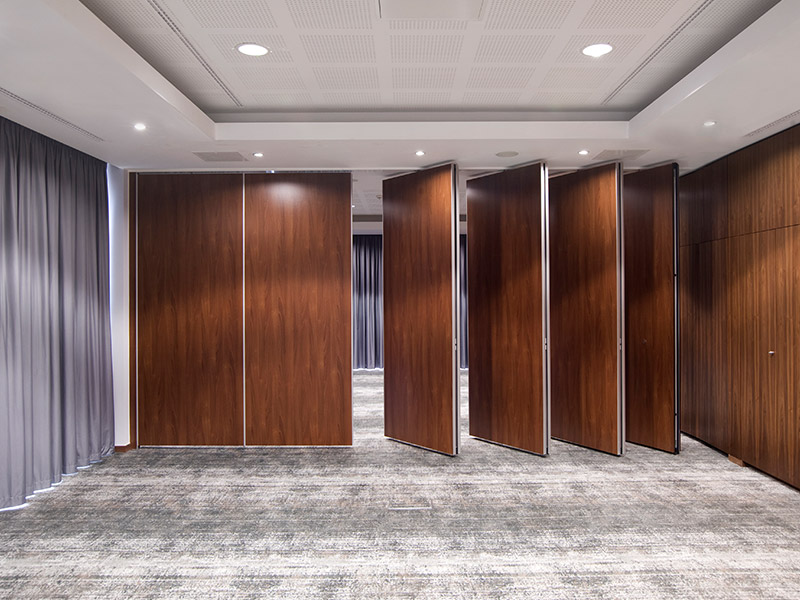
- Wood: Warm, natural appearance with strong structural integrity
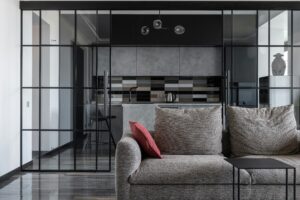
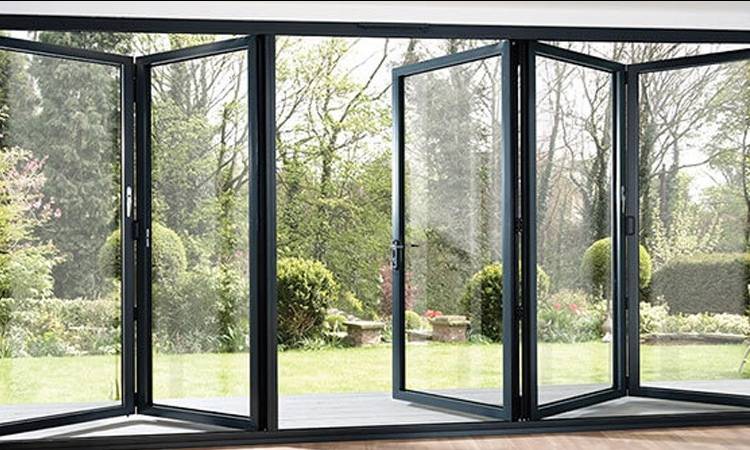
- Glass: Enhances light transmission and maintains visual openness
- Aluminum Frames: Provide strength while keeping the structure lightweight
- Composite Panels: Offer durability with design versatility
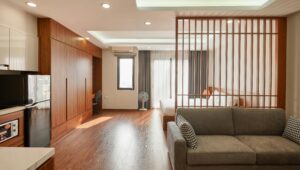
Wood-based designs, such as a wood slat room divider, are especially popular for adding texture and architectural interest. Slatted structures allow partial visibility while still defining boundaries, striking a balance between openness and separation.
Material selection should consider:
- Environmental conditions
- Desired privacy level
- Maintenance requirements
- Overall interior theme
Comparing Sliding, Hinged, and Accordion Partition Systems
Foldable partitions come in various operational styles, each suited for different applications. Understanding the mechanics behind each system helps determine which option best fits a particular space.
1. Sliding Partitions
- Move along a horizontal track
- Ideal for larger openings
- Provide smooth, minimal movement
- Often used in commercial or conference settings
2. Hinged Folding Partitions
- Operate similarly to folding doors
- Panels fold against each other
- Suitable for moderate-width openings
3. Accordion-Style Partitions
- Flexible panels connected with hinges
- Compact folding design
- Lightweight and easy to operate
Each system differs in track requirements, structural support, and storage space when folded. Sliding systems may require ceiling reinforcement, while accordion partitions are typically easier to install in lightweight structures.
Design Considerations Before Installing a Room Divider
Before installing any foldable partition, careful planning ensures optimal functionality and longevity. Several design factors should be evaluated.
Space Measurement
Accurate measurements determine whether the system will fit correctly. Consider:
- Ceiling height
- Wall alignment
- Floor leveling
Structural Support
Ceiling-mounted systems require sufficient load-bearing capacity. Lightweight partitions may attach directly to existing frames, but heavier designs need reinforced tracks.
Visual Integration
The divider should complement the surrounding décor. In many residential and commercial projects, particularly in regions focused on modern aesthetics like room divider dubai, customization plays a key role in achieving seamless integration.
Traffic Flow
Ensure the partition does not obstruct movement when folded or extended. Panels should fold neatly without interfering with furniture placement.
Acoustic and Privacy Benefits of Interior Partitions
While foldable partitions are not typically as soundproof as permanent walls, many systems offer enhanced acoustic properties. The level of privacy depends on material thickness, panel construction, and sealing mechanisms.
Privacy Advantages
- Visual separation for confidential meetings
- Temporary quiet zones in shared spaces
- Reduced distractions in open offices
Acoustic Enhancements
- Insulated core panels
- Rubber seals between panels
- Floor and ceiling track dampening systems
For environments requiring higher sound insulation, specialized acoustic-rated panels can significantly improve noise control without sacrificing flexibility.
Maintenance and Durability Factors to Consider Over Time
The lifespan of a foldable partition depends largely on material quality and maintenance practices. Regular care ensures smooth operation and prevents mechanical wear.
Maintenance Tips
- Clean tracks periodically to prevent debris buildup
- Lubricate hinges and rollers when necessary
- Avoid excessive force during operation
- Inspect panels for alignment issues
Wood partitions may require occasional refinishing, while PVC systems typically need only routine cleaning. Ensuring proper installation at the outset reduces long-term mechanical problems.
Durability also depends on usage frequency. In high-traffic environments, commercial-grade systems are recommended to withstand repeated folding and unfolding.
Creative Ways to Divide Open-Plan Living Areas Effectively
Open-plan designs offer spaciousness but sometimes lack functional separation. Foldable partitions provide creative solutions that enhance usability without compromising openness.
Ideas for Residential Spaces
- Create a flexible dining zone adjacent to the kitchen
- Separate a reading nook within a larger living room
- Convert part of a bedroom into a study corner
Ideas for Commercial Spaces
- Design modular event spaces
- Create collaborative team areas that can expand
- Segment training rooms for multiple sessions
Incorporating lighting elements, textured panels, or decorative patterns can elevate the visual impact of the divider. Semi-transparent materials allow light diffusion while maintaining defined boundaries.
Strategic placement of partitions enhances both aesthetics and practicality. Instead of seeing them purely as barriers, they can function as architectural features that add depth and dimension to interiors.
Conclusion
Foldable partitions represent a practical and adaptable solution for modern interiors. By offering temporary separation without permanent structural changes, they enable efficient space management in both residential and commercial environments.
From material selection and mechanical operation to acoustic performance and design integration, understanding how these systems work ensures informed decision-making. Whether used for privacy, flexibility, or aesthetic enhancement, foldable partitions continue to play an important role in dynamic space planning.
FAQs
1. What is the purpose of a foldable partition?
A foldable partition is used to divide larger spaces into smaller functional areas without building permanent walls. It allows users to reconfigure interiors based on changing needs.
2. How do foldable partitions improve space efficiency?
They maximize usable space by enabling temporary separation. When not needed, they fold away compactly, restoring openness and maintaining natural light flow.
3. Are foldable partitions suitable for small apartments?
Yes, they are particularly beneficial in small apartments where rooms often serve multiple purposes. They allow flexible division without reducing permanent floor area.
4. What materials are commonly used in room dividers?
Common materials include wood, PVC, glass, aluminum frames, and composite panels. Each material offers different benefits in terms of aesthetics, durability, and maintenance.
5. How do you maintain interior partition systems?
Maintenance involves cleaning tracks, lubricating hinges, ensuring proper alignment, and avoiding excessive force during operation to preserve smooth functionality.
6. Can partitions provide sound insulation?
While not as soundproof as permanent walls, many foldable partitions offer moderate acoustic control. Specialized acoustic panels can further enhance sound insulation for privacy-sensitive environments.